


10 AI Automation Trends Every Small Business Should Know in 2026

The conversation around Artificial Intelligence has moved from "what if" to "what's next". For small businesses, AI is no longer a futuristic luxury reserved for tech giants. By 2026, it will be the engine of efficiency, growth, and competitive advantage. The key is not just using AI, but automating with it.
Automation allows you to reclaim your most valuable asset: time. It lets you focus on strategy, customer relationships, and growth, while AI handles the repetitive, data-heavy tasks. If you're a small business owner looking to stay ahead, these are the ten AI automation trends you need to have on your radar.
1. Autonomous AI Agents for Operations
Think of this as hiring a digital employee who works 24/7. Autonomous AI agents are systems that can understand a goal, create a plan, and use your existing software to get the job done. You give them a prompt in plain English, and they execute multi-step tasks across different applications.
For a small business, this means you can say, "Summarize last week's sales from Shopify, identify the top-performing product, and post a celebratory message in our team's Slack channel." The agent will access the data, analyze it, and perform the action without you lifting a finger.
2. Hyper-Personalization at Scale
Customers in 2026 will expect every interaction to be tailored to them. AI automation makes this possible without hiring a massive marketing team. By connecting your CRM, e-commerce platform, and website analytics, AI can automatically segment customers based on their behavior.
This trend goes beyond using a customer's first name in an email. It means automatically sending a unique discount code for a product they viewed three times, personalizing your website's homepage based on their past purchases, or triggering a follow-up email sequence that adapts to their clicks.
3. AI-Powered Customer Service That Resolves Issues
The chatbot is evolving. By 2026, AI customer service agents will do more than just answer FAQs. They will be fully integrated with your business systems, allowing them to handle complex requests autonomously.
A customer will be able to interact with an AI to check an order status, initiate a return, reschedule a delivery, and get a refund processed. The AI will only escalate to a human agent for the most complex or sensitive issues, providing the human with a complete transcript of the conversation so far. This frees up your team to handle high-value customer interactions.
4. Automated Content Creation and Repurposing
Content is king, but creating it consistently is a major challenge for small businesses. AI automation will streamline the entire content lifecycle. You will be able to provide a single piece of pillar content, like a detailed blog post, and an AI system will automatically repurpose it into multiple formats.
This includes generating a script for a short video, creating an Instagram carousel with key takeaways, drafting a LinkedIn article, and writing a series of tweets, all scheduled to post throughout the week.
5. Predictive Sales and Automated Lead Nurturing
Instead of treating every lead the same, AI will automatically analyze and score them based on their likelihood to convert. By looking at data points like their source, on-site behavior, and company information, the AI can prioritize your sales team's efforts on the hottest prospects.
Furthermore, it can automate the nurturing process. A low-scoring lead might automatically receive an educational email series, while a high-scoring lead could trigger an alert for immediate personal follow-up or even receive an automated, personalized outreach from an AI Sales Development Rep (SDR).
6. Dynamic Inventory and Resource Management
For e-commerce stores, restaurants, and service-based businesses, managing inventory and resources is a constant balancing act. AI automation will take the guesswork out of it.
An AI system can analyze historical sales data, seasonality, current marketing promotions, and even external factors like local events or weather forecasts. Based on this analysis, it can automatically reorder popular products, suggest dynamic pricing adjustments to move slow-moving stock, or optimize appointment schedules to minimize downtime.
7. Automated Financial Reconciliation and Forecasting
Keeping finances in order is critical but time-consuming. AI will act as an automated bookkeeper and financial analyst. These tools will connect to your bank accounts, accounting software, and payment systems to automatically categorize transactions and reconcile accounts in real time.
More importantly, they will provide automated cash flow forecasting. By analyzing your income and expenses, the AI can alert you to a potential cash crunch weeks in advance or highlight periods of surplus cash that could be reinvested.
8. Proactive and Automated Cybersecurity
Small businesses are prime targets for cyberattacks, but few have dedicated IT security staff. AI-driven security platforms will become the standard for affordable protection. These systems work around the clock to monitor your network, emails, and devices.
When a threat is detected, the AI can take immediate, automated action. This could mean quarantining a suspicious email, blocking a malicious IP address, or isolating an infected device to prevent the threat from spreading, all before a human even needs to intervene.
9. Continuous Competitor and Market Monitoring
What are your competitors up to? In 2026, you will not have to spend hours manually checking their websites and social media. You can deploy an AI agent to do it for you.
This AI will automatically track competitors' pricing changes, new product launches, marketing campaigns, and customer reviews. It can then deliver a concise weekly report directly to your inbox, giving you the kind of competitive intelligence that was once only available to large corporations.
10. No-Code AI Workflow Builders
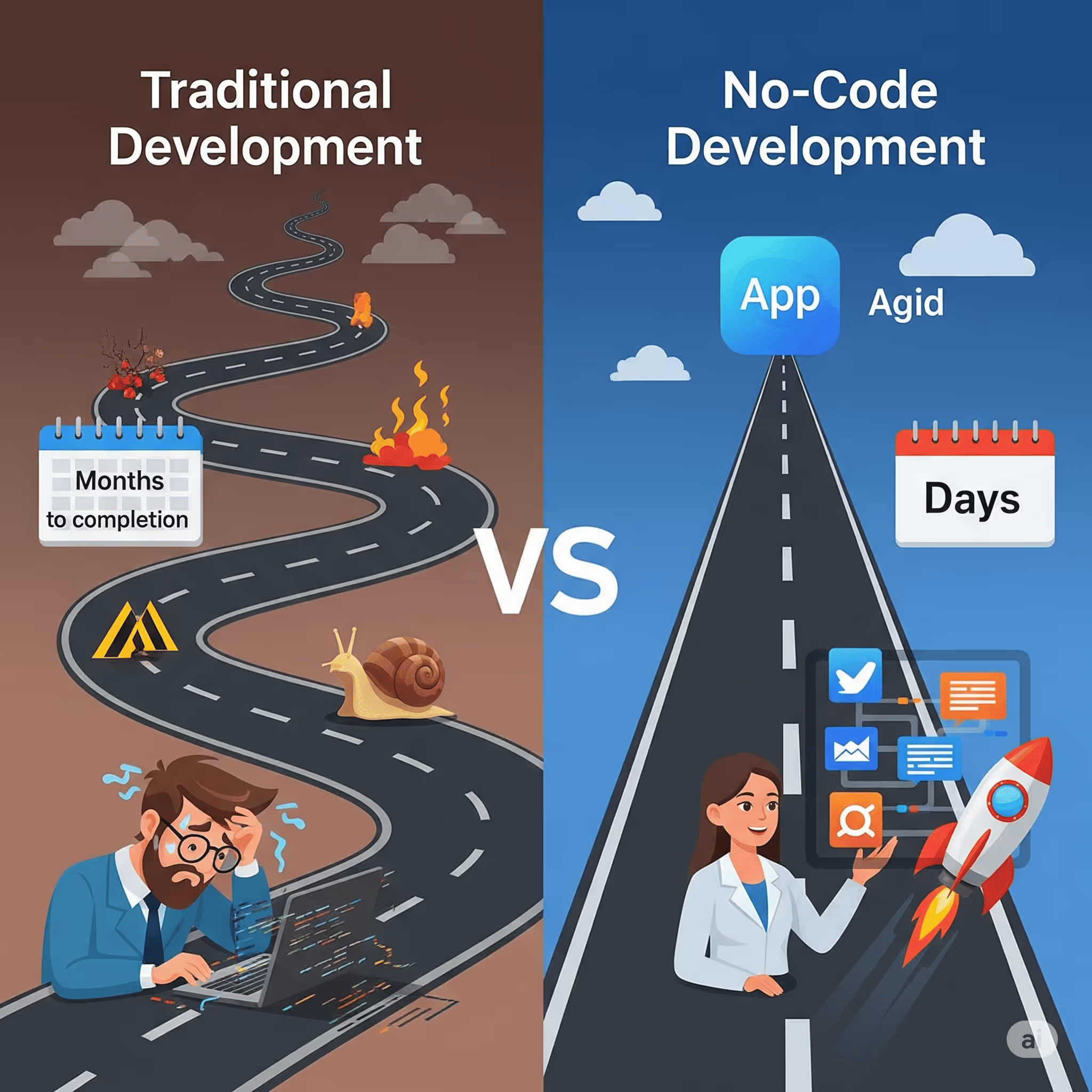
The trend that powers all other trends is the rise of accessible, no-code AI platforms. Tools like Zapier, Make, and others will have even deeper AI capabilities, allowing business owners to become "citizen automators".
You will be able to visually drag and drop triggers and actions to build sophisticated AI workflows without writing a single line of code. For example: "When a new customer signs up via my website, use AI to research their company on LinkedIn, draft a personalized welcome email, and add them to the 'New Customer' segment in my email marketing tool."
AI Automation Trends at a Glance
| Trend | Business Area | Key Benefit for Small Business |
|---|---|---|
| Autonomous AI Agents | Operations, Marketing | Frees up owner's time for strategic work |
| Hyper-Personalization | Marketing, Sales | Increases conversion rates and loyalty |
| AI Customer Service | Customer Support | Reduces support costs, improves satisfaction |
| Automated Content | Marketing | Solves content consistency and saves time |
| Predictive Sales | Sales, Marketing | Focuses sales efforts on high-value leads |
| Dynamic Inventory | Operations, E-commerce | Prevents stockouts and reduces waste |
| Financial Automation | Finance, Operations | Improves cash flow visibility, saves time |
| Proactive Cybersecurity | IT, Security | Provides affordable enterprise-grade protection |
| Competitor Monitoring | Strategy, Marketing | Delivers automated competitive intelligence |
| No-Code AI Builders | All Areas | Empowers non-technical users to build automations |
Getting Started: How to Prepare for the AI Wave
Embracing these trends does not require a PhD in computer science. It starts with a few practical steps:
- 1. Clean Up Your Data: AI is only as good as the data it learns from. Start organizing your customer lists, sales records, and financial data.
- 2. Identify Your Biggest Bottlenecks: Pinpoint the most time-consuming, repetitive tasks in your daily operations. These are the perfect first candidates for automation.
- 3. Start Small: You do not need to automate your entire business overnight. Pick one process, like lead nurturing or social media posting, and find a tool to help.
- 4. Choose Integrated Tools: Select AI software that can easily connect with the tools you already use, like your CRM, email platform, or accounting software.
- 5. Foster a Learning Mindset: Encourage your team to experiment with new AI tools. The future belongs to those who are willing to adapt.
The Future is Automated
AI automation is rapidly becoming the great equalizer, allowing small businesses to operate with the efficiency and intelligence of much larger organizations. The companies that begin to adopt these trends today will be the leaders of tomorrow. By automating the mundane, you free yourself and your team to do what humans do best: innovate, connect, and build relationships.
Related Blogs
.png)
.svg)
Get Started with Growthmak Today!
Unlock your marketing potential with our expert team.