The Future of Zero-Party Data: How B2B Brands Can Survive the Cookieless World
The business of collecting and using data is dramatically changing. As privacy rules get tighter and third-party cookies disappear, old ways of tracking will not only stop working, but in some cases, they will become completely outdated.
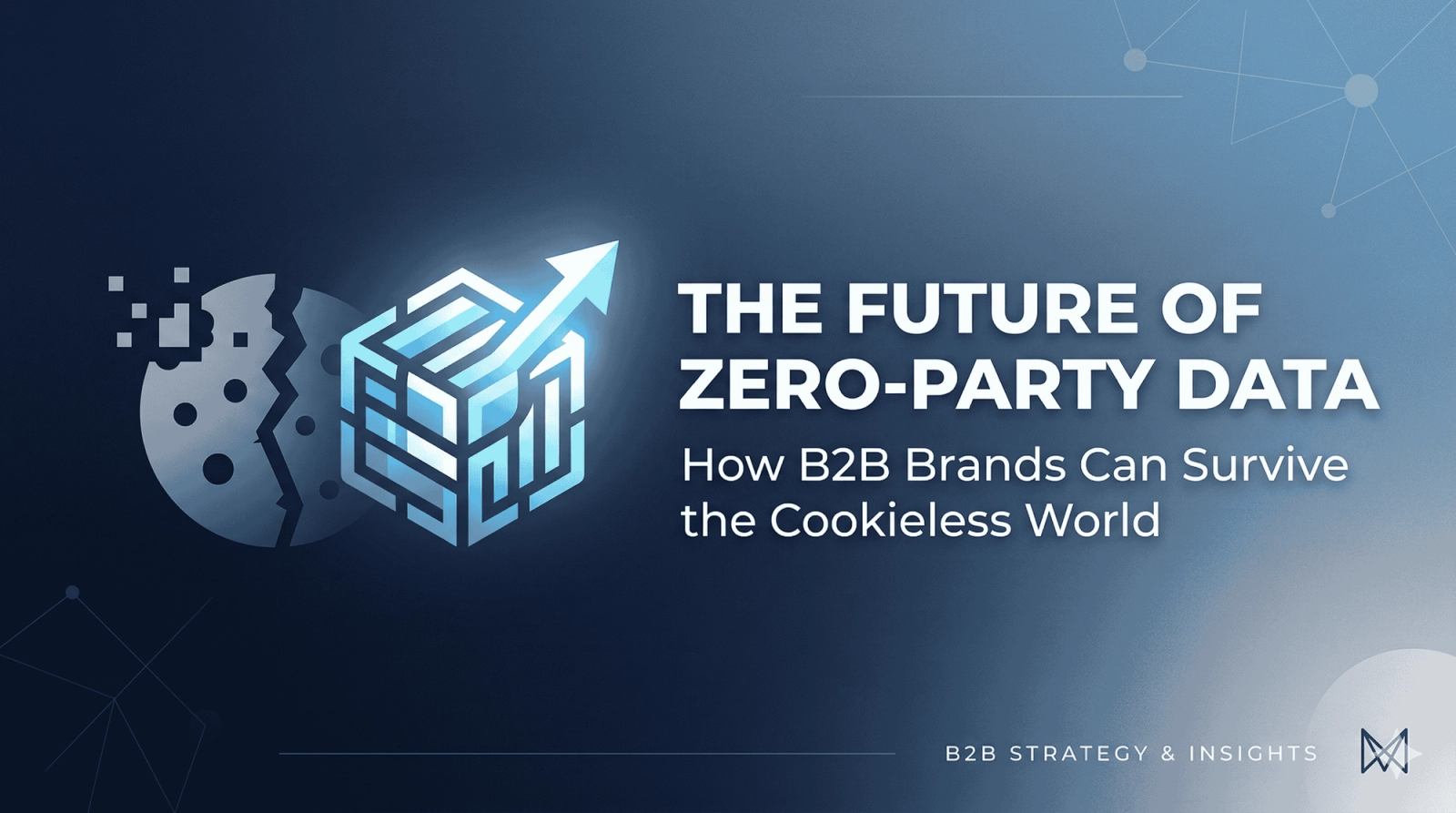
B2B marketers are mostly going to be affected by this change, as they use data a lot in their marketing and sales processes.
However, this is not just a problem; it is also a great opportunity.
You've heard of zero-party data, haven't you? It's that kind of data where customers share their info happily, and a company can have a really cool, open relationship with them this way.
Zero-party data - Definition
Zero-party data refers to the type of information that people give to a brand on purpose and in an active way.
Some examples are:
- What people like and don't like
- What a business really needs and the difficulties it is facing
- When someone is planning to make a purchase
- Contact info that is collected through forms or chats
Compared to third-party or even first-party data, zero-party data has the following features:
- It is very accurate
- It is based on the giving of permission
- It complies with privacy laws
This is data that will become your greatest asset in a world without cookies.
Why Losing Cookies is a Big Deal for B2B
In the past, marketers used to depend on cookies to follow what users were doing on websites, show ads to those users, and make their marketing campaigns more efficient.
However, this is no longer the case. There is a lot of discussion about privacy, and there are much stricter rules now. Because of this, big browsers are stopping the use of third-party cookies.
This gives rise to quite a few problems:
- You won't be able to see as much of what users do online
- Your retargeting ads won't work as well
- You won't be able to track the same audience on different platforms
- You will have to depend more on data owned by big platforms (such as Google or LinkedIn)
Because B2B firms generally have longer sales processes and more complex decisions, not having this type of insight will really make life harder for them and affect the number of leads and sales.
The Shift from Tracking to Trust
The next big thing in marketing won’t be about secretly following and gathering data about users—it will be about gaining their confidence, convincing them to disclose their information voluntarily.
That demands a radically different way of thinking:
- Collecting passive data → Engaging actively
- Delivering one-size-fits-all messages → Making experiences highly personalized
- Interrupting → Interacting through adding value
That’s exactly the area where zero-party data tactics come in.
How B2B Brands Can Collect Zero-Party Data
1. AI-Driven Lead Forms
Regular static forms are not only dull but also rejected by many. The AI forms, on the other hand, keep changing and updating themselves based on the data users provide.
Rather than bombarding users with the same set of questions, they:
- Change the questions according to the answers
- Lead users in a conversational way
- Discover thorough data regarding users’ needs and intentions
It is an excellent way of making data gathering less a chore and more of an enjoyable exchange.
2. Interactive Website Experiences
Simple, non-responsive websites will not make the cut any longer. Users nowadays crave interaction.
Interactive elements like:
- AI chat agents
- Surveys and quizzes
- Financial calculators and product recommendation engines
Prompt users not only to get involved but also to provide their info.
Take, for instance, an AI marketing consultant that probes a site visitor’s company objectives and difficulties through corresponding questions and, at the same time, gathers significant zero-party data.
3. Value Exchange
People tend to reveal personal details if the other side offers a valuable proposition.
Examples of such value could be:
- Individualized growth plans
- Insightful and comprehensive industry reports
- Tailored advice
- Complimentary evaluation or consulting
It all boils down to ensuring that the transaction is not only worthwhile but also spot-on.
4. Progressive Profiling
Rather than demanding a lengthy questionnaire from the prospect all at once, data handling should be spread out and saved carefully over time.
Every new piece of information gathered adds to the overall knowledge without making the other party feel like they are under too much pressure.
The Role of AI in Zero-Party Data Strategy
Marketers will not be able to collect, interpret, and act on zero-party data without AI at scale. Only AI can handle the vast influx of zero-party data that will come to companies.
This is because AI:
- Makes real-time personalization possible
- Analyzes user response data on the fly
- Divides users into segments based on intent
- Automatically presents personalized options
Such data-collection methods turn a passive activity into an intelligent and always-evolving one.
Benefits of Zero-Party Data for B2B Growth
Zero-party data is one of the best ways to direct your marketing and sales operations to achieve greater results:
1. Higher Lead Quality
When you get lead data straight from the source (users), it is bound to be more precise and meaningful.
2. Better Personalization
Knowing more about your leads allows you to make your communications more personal and appealing.
3. Stronger Trust and Transparency
Your offer becomes more trustworthy because users understand exactly what they have to give in return (their personal data).
4. Improved Conversion Rates
Engagement will naturally be higher if interaction is pertinent to the user, thereby lifting conversions.
Preparing for the Future
Crying over the harvested cookies is not worthwhile. Instead, you should get ready for a world without cookies.
B2B companies able to do this will be those:
- That creates engaging, user-first content
- That uses AI for enhanced personalization at scale
- That aims for maximum transparency and value
- Those design processes that track and utilize zero-party data meticulously
This is a strategic evolution rather than mere tactics.
Final Thoughts
The demise of cookies represents a step towards a more open, customer-oriented digital environment.
Smart companies that adapt may not only survive but also flourish.
Zero-party data is a key to unlocking the future of sustainable, quality growth—not only a simple patch.
Growthmak partners with B2B companies to design, build, and operate interactive activities powered by AI that gather zero-party data and create predictable revenue. Growthmak provides the right strategy and technology so that you stay ahead in a privacy-first, cookieless world.
Written by Growthmak Team · B2B Growth Specialists
All blogs