


SEO Recovery: How to Recover Your Website's Search Rankings After an Algorithm Update

One morning your traffic is steady, and by lunch it has fallen off a cliff.
You check analytics twice to be sure. Rankings that sat at positions three to five have slipped to page two, and the keywords that pay your bills are gone from the first page.
Take a breath, because this is fixable. A ranking drop after a Google algorithm update is common, even for well-built sites, and SEO Recovery is a methodical process rather than a scramble. What separates sites that bounce back from sites that stay down is discipline, not luck. The owners who panic and rewrite everything overnight usually take longer to recover than the ones who diagnose first.
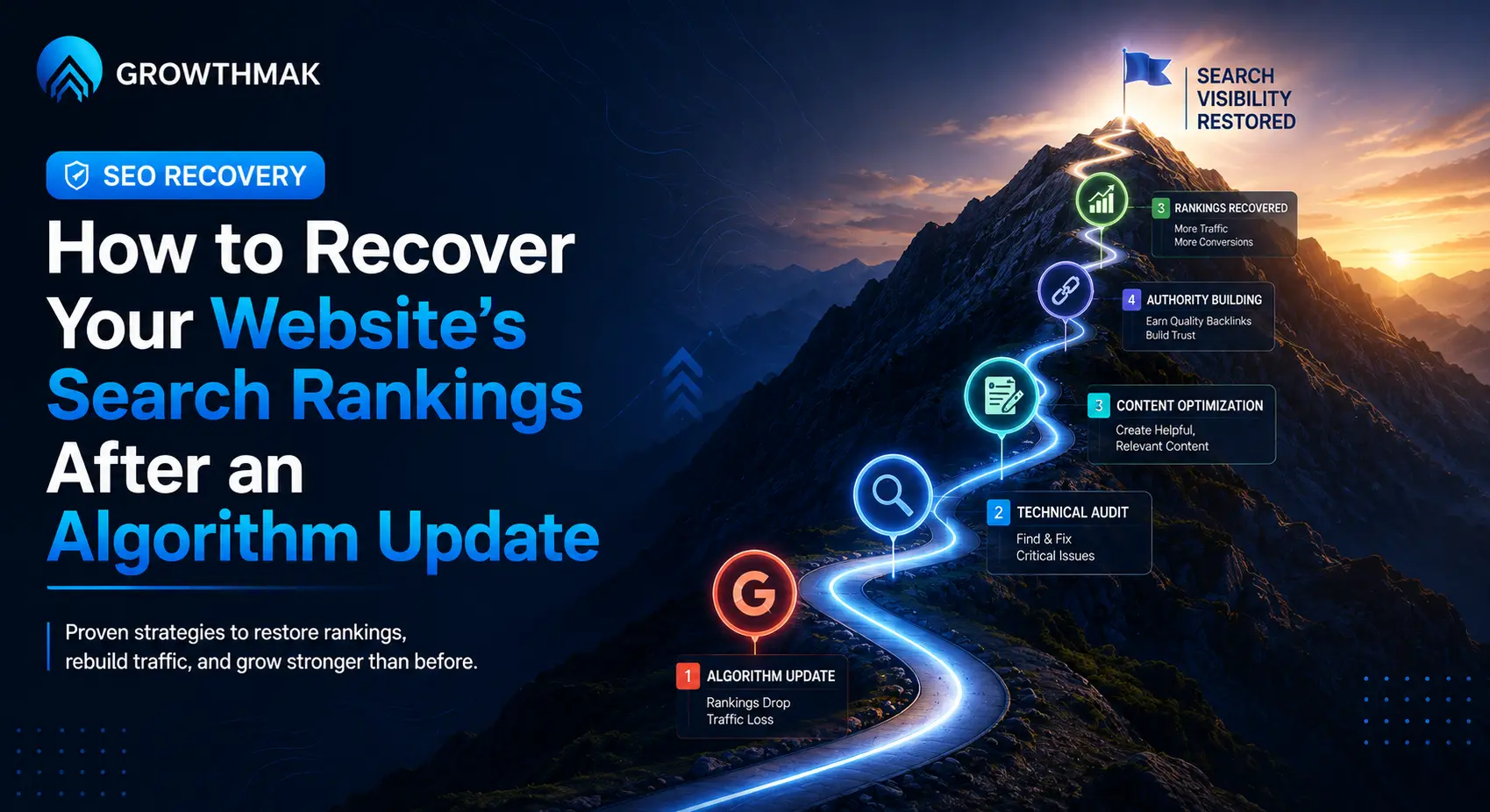
Effective SEO Recovery follows a fixed order:
- Confirm the cause before changing anything
- Diagnose whether it was a targeted or core update
- Review content quality and experience signals
- Audit technical health
- Improve, merge or prune weak pages
- Rebuild authority and wait for re-evaluation
Skip the diagnosis and you risk fixing the wrong thing, which wastes weeks and can dig the hole deeper.
What SEO Recovery Actually Requires
SEO Recovery requires improvement across content, experience signals and technical health at the same time, not a single quick fix. A Google update rarely penalizes you. More often it decides other pages now serve users better, so recovery means genuinely closing that quality gap. Start by confirming the cause, then diagnose whether a targeted or core update hit you, then fix your highest-value pages first. The condition that sets your timeline is the update type. Targeted issues can lift once fixed, while core updates often need Google to re-evaluate your whole site during a later update before rankings return.
First, Confirm the Cause Before You Touch Anything
Before you change a single page, confirm an update actually caused the drop. Many owners rush to rewrite content and later discover the real problem was a tracking glitch, a seasonal dip or an accidental noindex tag.
Open Google Search Console and compare impressions, clicks and average position before and after the drop. A sharp, site-wide decline that lines up with a known search algorithm change points to an update. A slow slide or a single-page drop usually points somewhere else.
Cross-check the date against Google's published list of ranking updates. If your decline started within a day or two of a confirmed rollout and you made no major site changes, the update is the likely cause. That confirmation is the foundation of any real Website Ranking Recovery.
- Rule out analytics and tag errors first
- Match the drop date to a confirmed rollout
- Identify which pages and queries lost the most
Export the affected queries and pages while you are in there. That list becomes your recovery roadmap, because it tells you exactly where Google decided other pages now serve users better, and it stops you from spreading effort across pages that never dropped.
Watch the rollout window too. Updates commonly take two to four weeks to finish, and rankings swing during that period, so a page that looks lost in week one can partly settle by week three before you have touched anything.
Diagnose the Type of Algorithm Update
The type of Search Engine Algorithm Update decides how wide your fix needs to go. Getting this wrong is why so many recovery attempts stall.
Targeted updates address specific issues, such as a spam pattern or a particular content problem. When one hits, you can often identify and fix the exact fault and recover once the change is recognized.
Core updates are broader. They reassess how the algorithm evaluates quality, relevance and authority across your entire site at once, so recovery calls for holistic improvement rather than a single patch. If a core update hit you, expect to strengthen the whole foundation, not one page.
Read the pattern of the drop to tell them apart. A decline concentrated on a specific content type or section suggests a targeted update, while a drop spread evenly across many pages and queries suggests a core reassessment.
The SEO Recovery Plan, Step by Step
Work this Algorithm Update Recovery plan in order. Fix your highest-value pages first, because that is where most recoveries actually happen and where a small win funds the rest of the work.
Treat SEO Recovery as connected work, not four separate projects. Content, technical health and authority reinforce each other, and a core update reassesses all of them at once. Fix one in isolation and the drop often persists, because the weakest signal still drags the page down.
1. Run a Content Quality and E-E-A-T Review
Start with content, because core updates reward pages that demonstrate stronger E-E-A-T signals. Find pages that are thin, outdated, duplicated or over-optimized, and ask honestly whether each one is the best answer to its query.
Add what competitors cannot copy: first-hand experience, original insight, refreshed statistics and clear expertise. A shallow rewrite that only reshuffles the same words does not close the quality gap that caused the drop.
Match every page to real search intent. If the top results now answer a question yours only skirts, that mismatch is often the reason Google moved another page above yours.
Run a direct comparison on your lost pages. Search the target keyword, open the pages now outranking you, and ask what they cover, prove or explain that you do not. That gap, not a missing keyword, is usually what the update rewarded in them.
Prioritize by impact, not by effort. Fix the pages that lost the most visibility and drive the most revenue first, because that is where a recovery both shows up fastest and pays for the rest of the work.
2. Run a Technical SEO Audit
A Technical SEO Audit rules out mechanical causes and protects the content work you are about to do. Check indexation, crawl health, page speed and mobile usability, and fix broken links and server errors.
Technical health plays a real role in recovery, especially during core updates. A fast, crawlable, error-free site gives your improved content the best chance of being re-evaluated favorably.
Catch the causes that mimic an update. A botched migration, an accidental noindex, a robots rule blocking key pages or a plugin conflict can all crater rankings on the same timeline as a rollout, and no amount of content work fixes a page Google can no longer index.
Check page experience while you are at it. Slow, unstable pages that frustrate visitors send exactly the negative signals a quality-focused update looks for, so speed and mobile fixes support the content improvements rather than competing with them.
- Confirm important pages are indexed and canonical
- Fix broken links, redirects and crawl errors
- Resolve speed and mobile usability failures
3. Improve, Merge or Delete Weak Pages
Use a simple rule on every weak page: improve, merge or delete. Improve pages worth saving with real depth and updated information.
Merge pages that overlap and compete with each other into one stronger resource, then redirect the old URLs. Delete only pages that genuinely add nothing, because removing content carelessly damages the topical authority you are trying to rebuild.
Look for low-effort, high-value wins first. Some pages need only a refresh of statistics, a stronger answer near the top, or a clearer match to intent to reclaim rankings, and those quick wins build momentum while the deeper work continues. Save the full rewrites for the pages that truly warrant them.
4. Strengthen Authority and Trust
Rebuild authority the durable way. Earn quality mentions and links from relevant sources, since strong how ranking works signals still support recovery when they come from genuine editorial interest rather than manipulation.
Tighten trust signals too: clear authorship, accurate contact and policy pages, and honest, verifiable claims. These small transparency wins add up to the trustworthiness that core updates increasingly weigh.
Quality beats quantity on links every time. A handful of genuine mentions from relevant, respected sources does more for recovery than a pile of low-value links, and it carries none of the risk that spammy tactics invite during a fragile recovery period.
Give the whole plan time to compound. Authority signals move slowly, so keep publishing genuinely useful content and earning real mentions rather than expecting a single link to reverse the drop overnight.
What Not to Do After an Algorithm Update
Do not make drastic, panicked changes in the first two to three weeks. Updates often take that long to fully roll out, rankings fluctuate during the rollout, and premature moves can make things worse.
Do not delete underperforming content in a panic, because that erodes topical authority. Do not update publish dates without changing the content, since Google detects real modifications rather than timestamps. And do not file a reconsideration request, because core updates are not manual actions and that process does not apply.
- No spammy link building to force a rebound
- No mass content deletion as a first move
- No fake freshness through changed dates alone
Above all, do not thrash. Changing direction every few days makes it impossible to learn what worked, and it keeps your site in a constant state of flux that Google struggles to re-evaluate cleanly. Pick a plan, apply it fully, and give it room to work.
How Long SEO Recovery Takes
SEO Recovery is gradual, not instant. Many sites see improvement within four to eight weeks of making the right changes, while heavily hit sites can take two to three months or longer. Patience here is a strategy, not a weakness, because rushed changes reset the clock.
For core updates, Google has indicated that meaningful recovery often waits for a subsequent update, when the algorithm re-evaluates your improved site. You do not have to sit idle in the meantime. Keep improving, and track leading signals so you know the work is landing.
Watch the early indicators before rankings fully return. Rising impressions, better click-through rates and pages climbing from page three to page two all show progress, even while your headline position lags. Small week-over-week gains mean you are on the right track.
Document every change with dates. When rankings do move, that log tells you which fixes worked, which is the difference between a repeatable recovery process and a lucky one you cannot explain later.
Final Thoughts on SEO Recovery
The verdict is clear: recovery comes from genuinely closing the quality gap that caused the drop, not from shortcuts or panic. Sites that recover fastest treat the update as a prompt to become the best answer for their queries.
What changes the outcome is the update type and how thoroughly you improve. A targeted fix can lift quickly, while a core update rewards patient, site-wide work rewarded at the next re-evaluation.
Start with three moves this week: confirm the cause in Search Console, list the pages that lost the most, and begin a content and technical review of your top revenue pages.
Recover Your Rankings with Growthmak
Growthmak approaches recovery as a diagnosis before a prescription. Our SEO and growth services team runs the content, technical and authority review that Search Engine Recovery demands, and you can review past client work or the full service list to see how we work.
Visit www.growthmak.com to request a recovery audit and find the real cause of your ranking drop before you spend weeks fixing the wrong thing.
How Do I Know If a Google Algorithm Update Hit My Site?
Compare your traffic decline with confirmed Google algorithm update dates using Google Search Console. Review impressions, clicks, and rankings before and after the drop. If the timing matches and no major site changes occurred, an algorithm update is the likely cause.
How Long Does SEO Recovery Take After an Update?
SEO recovery typically takes four to eight weeks for targeted improvements, while major recoveries can require several months. Recovery depends on update type, site authority, technical fixes, and content quality. Consistent optimization and monitoring help accelerate long-term ranking improvements.
Can I Recover Lost Rankings Without Waiting for the Next Update?
Yes, partial recovery is possible before the next update by improving content quality, fixing technical issues, and strengthening user experience. However, significant recovery after core updates often happens when Google reassesses websites during future algorithm updates.
Should I Delete Pages That Lost Rankings?
No. Improve valuable pages with updated information, merge overlapping content, and redirect outdated URLs when necessary. Deleting pages too quickly can reduce topical authority and weaken overall SEO performance, making recovery more difficult than improving existing content.
Is a Technical SEO Audit Necessary for Recovery?
Yes. A Technical SEO Audit identifies indexing issues, crawl errors, broken links, page speed problems, and mobile usability concerns. Resolving these technical barriers improves search engine crawling, supports content recovery efforts, and strengthens long-term organic search performance.
Does Disavowing Links Help After a Core Update?
Usually not. Core updates primarily evaluate content quality, relevance, and authority rather than backlinks alone. Use Google's disavow tool only for confirmed spammy or unnatural links. Most websites achieve better recovery by improving content and earning high-quality backlinks naturally.
Will Updating Publish Dates Help Recovery?
No. Simply changing publication dates without meaningful content updates does not improve rankings. Instead, refresh outdated information, add valuable insights, improve accuracy, and update content to match current search intent before modifying the published or updated date.
How Do I Protect My Site from the Next Algorithm Update?
Create high-quality, user-focused content, maintain technical SEO, monitor Search Console regularly, and diversify traffic sources beyond Google. Consistently improving website quality, expertise, and user experience builds resilience against future algorithm updates and ranking fluctuations.
Related Blogs

.svg)


Get Started with Growthmak Today!
Unlock your marketing potential with our expert team.