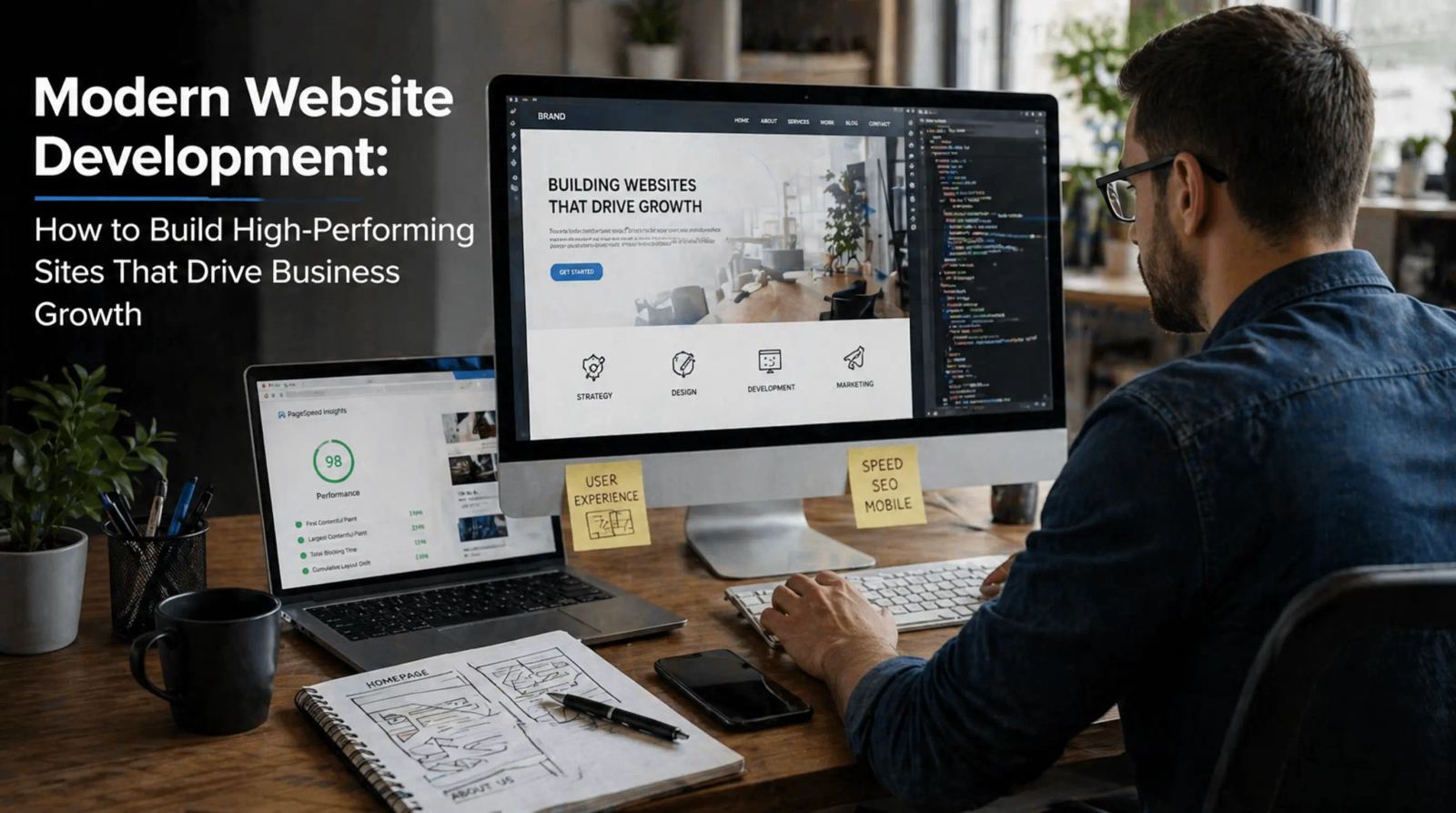
Modern Website Development: How to Build High-Performing Sites That Drive Business Growth
In today’s fast-moving digital landscape, where attention spans are short and competition is only a click away, your website is more than a presence, it’s a critical growth asset. Yet many businesses invest in design and development without seeing meaningful results, often struggling with low engagement and weak conversions.
The problem isn’t visibility, it’s performance.
Modern website development is about more than sleek visuals. It’s about building fast, scalable, and conversion-focused experiences that guide users seamlessly from interest to action. A truly high-performing website doesn’t just attract visitors, it compels them to stay, engage, and convert.
In this guide, you’ll discover how to build websites that don’t just exist, but actively drive real, measurable business growth.
What is Modern Website Development?
Modern website development is a strategic approach that combines advanced technologies, user-centric design, and performance optimization to create websites that deliver real results.
Unlike traditional methods that focused mainly on design, modern development emphasizes:
- Performance-first architecture
- Mobile-first and responsive website development
- SEO integration from the ground up
- Scalable and flexible frameworks
This approach ensures your website is not only visually appealing but also fast, functional, and future-ready.
Why High-Performing Websites Matter for Business Growth
A high-performing website directly impacts how users interact with your brand—and whether they convert.
1. Speed Drives Engagement Fast-loading websites meet user expectations, reduce bounce rates, improve session duration, and create seamless browsing experiences that keep visitors engaged longer.
2. UX Influences Conversions Strong user experience ensures intuitive navigation, clear structure, and easy access to information, helping users take actions that drive conversions effectively.
3. Performance Impacts Revenue Improved website speed and usability enhance customer satisfaction, increase engagement, and directly boost conversions, leads, and overall business revenue growth.
In short, performance isn’t just technical—it’s a revenue driver.
Key Elements of High-Performing Website Development
Speed & Performance Optimization
Website speed plays a key role in user experience and search rankings. Strong website performance optimization focuses on:
- Optimizing images and media files
- Using content delivery networks (CDNs)
- Implementing caching strategies
- Minimizing CSS, JavaScript, and HTTP requests
These practices ensure your site loads quickly across all devices.
Responsive & Mobile-First Design
With the majority of users browsing on mobile devices, responsive website development is essential.
A mobile-first approach ensures:
- Seamless experience across screen sizes
- Better search engine rankings
- Higher user engagement
User Experience (UX) That Converts
A high-performing site must be intuitive and user-friendly.
Focus on:
- Simple navigation
- Clear call-to-actions (CTAs)
- Clean layouts and readability
- Accessibility for all users
Good UX reduces friction and guides users toward conversion.
Scalable Website Architecture
Scalable website development ensures your platform can handle increased traffic and new features without performance issues.
This involves:
- Choosing the right technology stack
- Modular development
- Efficient database management
Best Practices to Build High-Performing Sites
To build truly effective websites, follow these proven practices:
- Write clean, optimized code
- Compress and optimize images
- Enable lazy loading for media
- Reduce unnecessary plugins and scripts
- Use HTTPS for security
- Conduct regular performance audits
These steps ensure consistent performance and long-term reliability.
Conversion-Focused Web Development Strategies
Driving traffic is only half the battle—converting visitors is what matters.
Conversion-focused web development includes:
- Designing with clear business goals in mind
- Creating optimized landing pages
- Using A/B testing to refine user journeys
- Tracking behavior with analytics tools
- Structuring content for easy navigation
When development aligns with conversion strategy, your website becomes a growth engine.
Even well-designed websites can underperform when critical fundamentals are overlooked. Small gaps in usability, speed, or structure often compound into lost traffic and conversions. Addressing these issues early ensures your site remains efficient, scalable, and aligned with business goals.
- Ignoring mobile optimization
- Slow loading speeds
- Poor navigation and confusing layouts
- Lack of SEO structure
- Not planning for scalability
Resolving these challenges improves user experience, boosts search visibility, and drives consistent, measurable growth.
Future Trends in Modern Website Development
Modern website development is rapidly evolving, and staying ahead means adopting technologies that enhance user experience and performance. Businesses that leverage innovation can deliver faster, smarter, and more engaging digital experiences.
- AI-driven personalization for better user engagement
- Headless CMS for flexibility and scalability
- Progressive Web Apps (PWAs) for app-like experiences
- Voice search optimization for evolving user behavior
Embracing these trends helps create future-ready websites that are scalable, user-centric, and built for long-term growth.
Why Choose GrowthMak for Modern Website Development GrowthMak delivers modern website development solutions focused on building high-performing, conversion-driven websites that support real business growth. Every project is strategically designed to balance performance, scalability, and user experience.
- Performance-first development for fast-loading websites
- Conversion-focused design to maximize leads and sales
- Scalable architecture for long-term growth
- User-centric UX/UI for seamless engagement
- SEO-optimized structure for better visibility
With a strong emphasis on website performance optimization and responsive website development, GrowthMak ensures your site not only attracts visitors but converts them effectively, helping your business stay competitive in an increasingly digital landscape.
Final Thoughts
Modern website development is no longer optional—it’s essential for businesses that want to grow online. By focusing on performance, user experience, and scalability, you can build high-performing websites that not only attract visitors but convert them into customers.
The key takeaway is simple: Performance + UX + strategy = real business growth.
If your current website isn’t delivering results, it may be time to rethink your development approach and invest in a future-ready solution.
FAQ’s
What is modern website development?
Modern website development is an advanced approach to building websites that prioritizes performance, scalability, security, and user experience. It combines responsive design, clean code, and SEO best practices to create fast, efficient, and future-ready digital platforms.
Why is website performance important for business growth?
Website performance directly impacts user engagement, search rankings, and conversions. Fast-loading websites reduce bounce rates, improve user satisfaction, and increase the chances of turning visitors into customers, ultimately driving measurable business growth and revenue.
What makes a website high-performing?
A high-performing website is fast, responsive, user-friendly, and optimized for search engines. It includes strong UX design, efficient coding, mobile compatibility, and scalable architecture to ensure consistent performance and better user engagement.
How can I improve my website’s performance?
You can improve website performance by optimizing images, enabling caching, using CDNs, minimizing scripts, and implementing efficient coding practices. Regular audits and tools like PageSpeed Insights help identify areas for continuous website performance optimization.
How does UX impact website conversions?
User experience (UX) plays a critical role in guiding visitors through your website. Clear navigation, intuitive design, and strong calls-to-action reduce friction, improve engagement, and significantly increase conversion rates and customer satisfaction.
How often should a website be updated or redesigned?
Websites should typically be updated regularly and redesigned every 2–3 years. Frequent updates ensure optimal performance, security, and relevance, while redesigns help align with evolving design trends, technologies, and user expectations.
Can a well-developed website improve SEO rankings?
Yes, a well-developed website significantly improves SEO rankings. Factors like fast loading speed, mobile responsiveness, clean structure, and optimized code help search engines crawl and index your site more effectively, boosting visibility.
Written by Growthmak Team · B2B Growth Specialists
All blogs