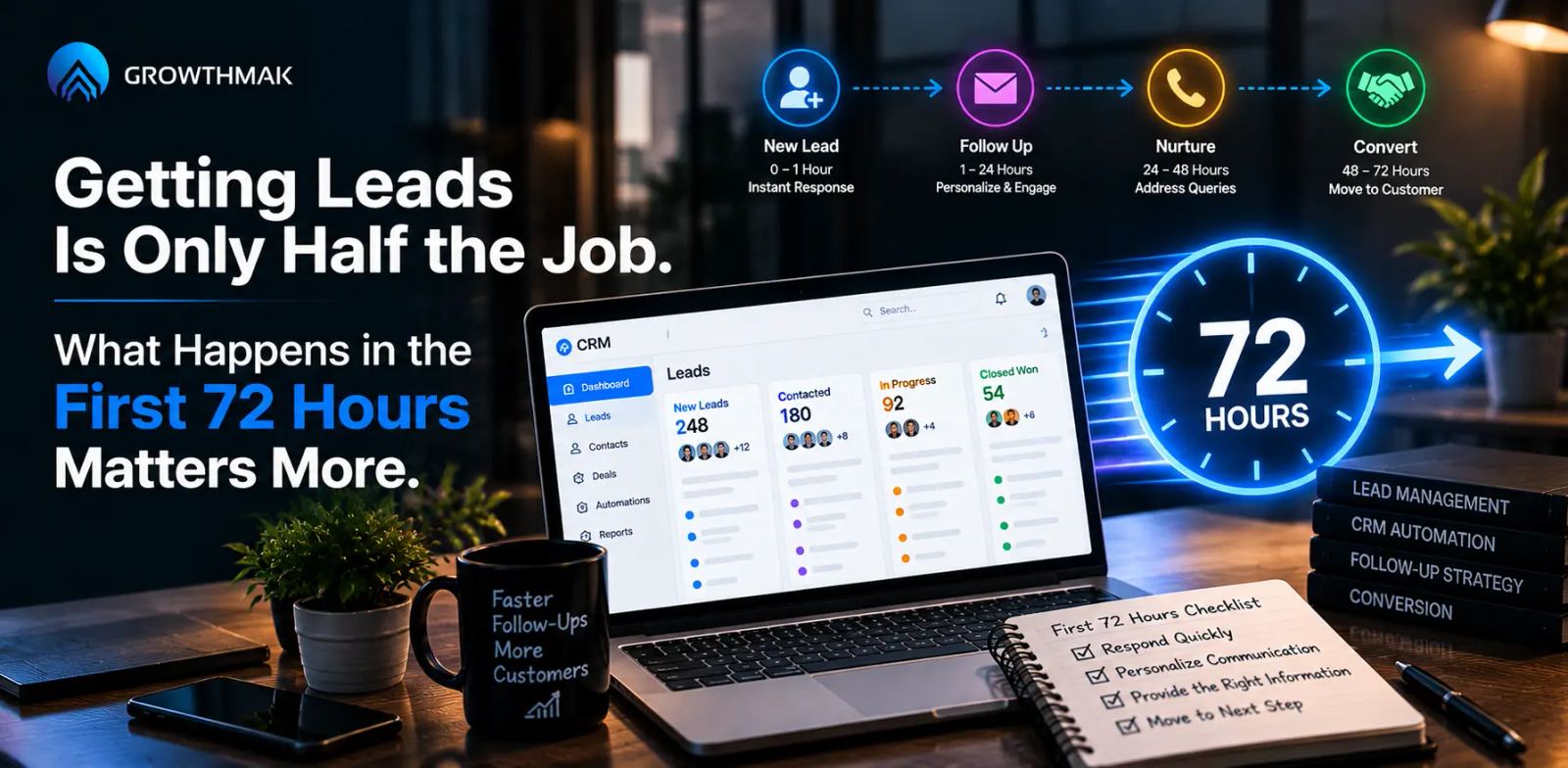
Getting Leads From Meta Ads but Struggling to Turn Them Into Customers?
The lead volume looks incredible. Forty submissions this week at a fraction of what search leads cost, and the cost per lead keeps dropping.
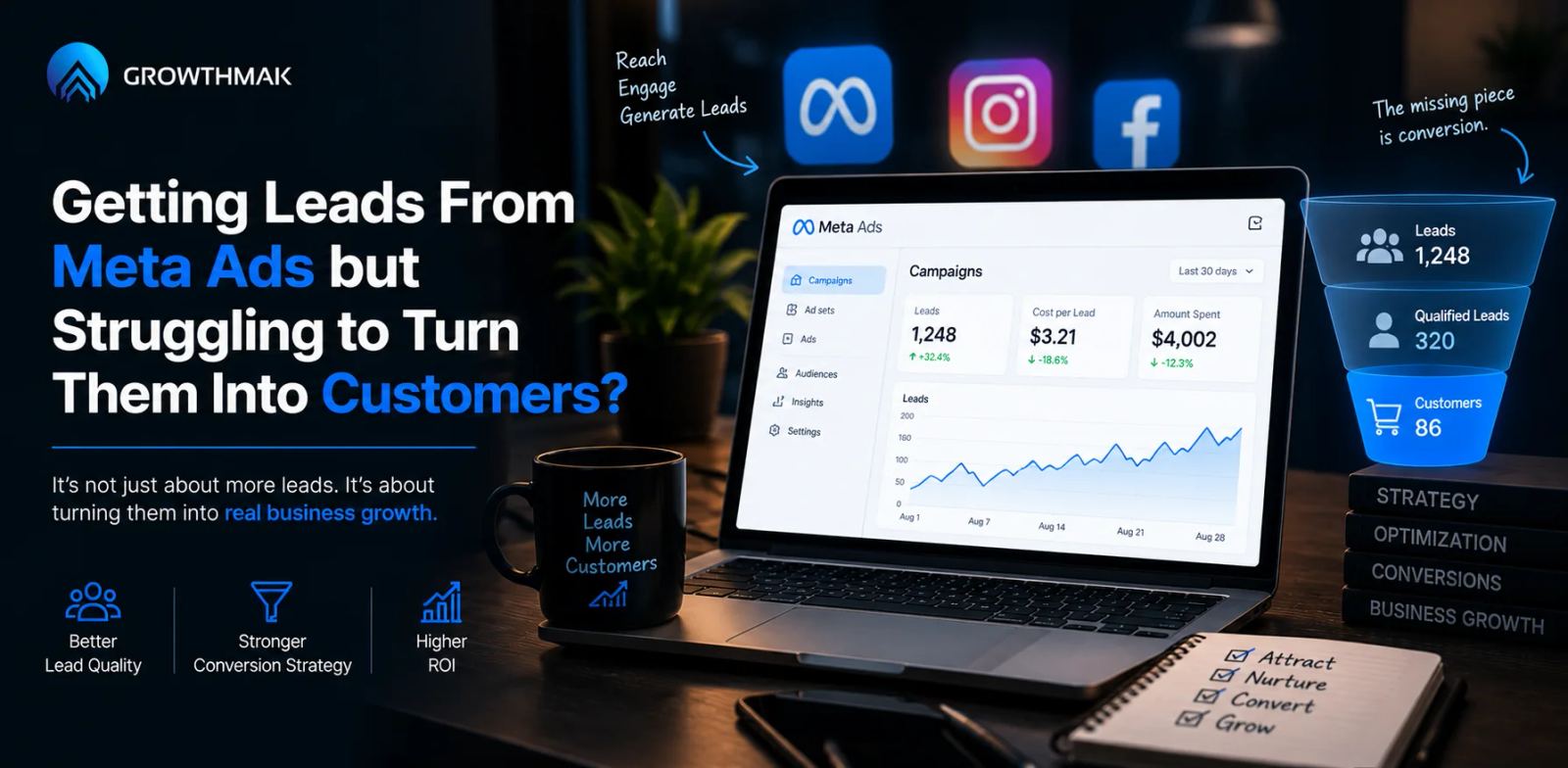
Then sales starts calling. Half the numbers do not connect, a third of the people do not remember filling anything in, and the rest were never going to buy.
This is the most common Meta Ads management problem, and it rarely announces itself as a problem at all. On paper the campaign is winning.
The gap sits squarely between the form submission and the actual sale, which is exactly where most advertising reporting stops looking.
Closing that gap is what serious Meta Ads management actually involves, and almost none of the work happens inside the ad platform itself.
Here is what usually causes it:
- Forms so easy to submit that submitting means nothing
- A campaign told to find form fills rather than customers
- Follow-up that arrives days after the moment passed
- An offer that attracts curiosity instead of intent
Why Do Meta Ads Leads Never Become Customers
Meta Ads leads often fail to convert because social advertising interrupts people rather than catching them mid-search. Someone typing a commercial query into a search engine has already decided they want something. Someone scrolling a feed has not, and a prefilled instant form lets them express mild curiosity in two taps without any real commitment behind it. That produces high volume at a low cost per lead and a close rate far below what search delivers. The fix is usually adding deliberate friction, optimizing for a downstream event, and following up within minutes rather than days.
Why Cheap Leads Are Often the Problem, Not the Win
Search advertising captures intent that already exists. Social media marketing creates or interrupts it, which changes what a lead actually represents.
A search lead raised their hand while actively looking. A social lead raised their hand while looking at something else. Both count as one lead in a dashboard.
That single sentence explains most of the disappointment businesses feel with paid social. The unit of measurement is identical while the underlying intent is not remotely comparable.
That difference is why a low cost per lead can hide a terrible cost per customer. Halving the cost of a lead while quartering the close rate leaves the business worse off, and no standard report shows that clearly.
Most Meta Ads work for businesses gets judged on the metric that looks best rather than the one that pays the bills. Volume and cost per lead are both easy to improve and neither guarantees revenue.
None of this makes the channel bad. It makes the default reporting misleading, which is a different and more fixable problem.
Good Meta Ads management starts by deciding which number the account is actually being run against. Until that is settled, every optimization decision is a guess dressed up as analysis.
The rest of this article assumes the answer is revenue rather than volume. If your business genuinely needs raw volume, most of what follows applies in reverse.
6 Reasons Your Meta Ads Leads Are Not Converting
These six causes turn up in most accounts where volume is healthy and revenue is not.
They are listed roughly in order of how quickly they can be fixed. The first three usually take days, while the last three involve changing how the account gets measured and judged.
1. Your Instant Forms Make Submitting Too Easy
Instant forms prefill name, email, and phone from the user profile. Submitting takes two taps and requires no thought, no typing, and no genuine decision.
That frictionlessness is the selling point and also the problem. Friction filters, and removing all of it removes the filter along with the effort.
| Form Type | Typical Volume | Typical Lead Quality |
|---|---|---|
| Instant form, prefilled | Highest | Lowest, many accidental submissions |
| Instant form with a qualifying question | Moderate | Noticeably better |
| Landing page form | Lowest | Highest, the visitor chose to arrive |
Adding a single qualifying question, or sending traffic to a landing page instead, cuts volume and usually raises revenue at the same time.
The question does not need to be difficult. Asking for a budget range, a timeline, or a service type forces a moment of attention that a prefilled form never requires.
Expect the lead count to drop noticeably within days and the sales team to stop complaining about wasted calls within about a week. Both of those are signs the filter is doing exactly what it was added to do.
2. Your Campaign Optimizes for Leads Instead of Customers
The platform finds more of whatever event you tell it to value. Optimize for form fills and it becomes extremely good at finding people who fill in forms.
Those are not the same people as those who buy. Meta Ads optimization only helps when the event it optimizes toward actually correlates with revenue.
Sending a downstream event back to the platform, a qualified lead or a closed sale rather than a submission, changes what the algorithm hunts for.
- Send back the closest event to revenue you can reliably track
- Mark unqualified leads so the signal stays clean
- Allow a learning period before judging the change
This is the highest-impact change available inside the ad account itself, and also the one most often skipped, because it requires connecting the platform to whatever system tracks actual sales.
3. Nobody Follows Up Fast Enough
A social lead was scrolling a feed thirty seconds before they submitted. Their attention has already moved on, and it keeps moving.
Search leads tolerate a slower response because they were actively looking. Meta Ads lead generation does not have that cushion, which makes speed of first contact the highest-leverage fix available.
Calling within five minutes rather than five hours changes connect rates dramatically, and it costs nothing except process discipline.
- Route new leads to a phone or a person, not only to an inbox
- Send an immediate message that names the specific offer they responded to
- Attempt contact more than once before writing the lead off
Reminding the lead exactly what they submitted matters far more than most teams expect. A generic first message from an unfamiliar company reads like spam to somebody who barely remembers seeing the ad in their feed.
4. Your Offer Attracts Interest, Not Intent
A broad giveaway or a generic guide attracts people who want the giveaway or the guide. Very few of them wanted the paid product behind it.
Tying the offer directly to what you actually sell filters at the point of interest rather than at the point of the sales call.
A smaller, more specific offer produces fewer leads and better ones. That trade is usually worth making when sales capacity is limited.
- Offer a quote, consultation, or trial rather than a generic download
- Name the specific product or service in the ad itself
- Avoid prize draws and broad giveaways when you need buyers
Offer selection is the part of Meta Ads management that sits furthest from the ad platform and matters most. No targeting change compensates for an offer that attracts the wrong motivation.
5. Your Audience Was Built for Reach, Not Fit
Broad targeting reliably lowers cost per lead. It lowers lead quality by the same mechanism, because the cheapest impressions reach the least qualified people.
Exclusions matter as much as inclusions here. Removing existing customers, unqualified segments, and past non-converters sharpens delivery immediately.
Most accounts have never had their exclusion lists reviewed at all since launch. Reviewing them takes about an hour and often improves lead quality more than an entire week spent testing new interest categories.
Feeding real customer data back where possible gives the system something concrete to model. Facebook Ads lead generation improves considerably when the platform knows what a good customer looks like.
Upload a list of actual paying buyers rather than all collected leads, then build the audience from that list instead. A model trained on submissions will reliably find more submitters, and a model trained on customers finds something considerably closer to customers.
6. You Measure Cost Per Lead Instead of Cost Per Customer
Cost per lead ignores close rate entirely, which makes it useless for comparing campaigns whose lead quality differs. Cost per action only means something once the action chosen is the one that generates revenue.
Tracking spend against closed customers rather than submissions changes which campaign looks best, often reversing the ranking completely.
- Record which campaign each closed customer originally came from
- Divide total campaign spend by customers won, not leads collected
- Review the comparison monthly rather than after a bad quarter
This single reporting change does more for Meta Ads management than most creative refreshes, because it corrects what every subsequent decision gets measured against.
How Meta Ads Management Should Compare Campaigns
The reversal is easier to see with numbers than to argue in the abstract.
| Campaign | Cost Per Lead | Close Rate | Cost Per Customer |
|---|---|---|---|
| Instant form, broad audience | 10 | 2 percent | 500 |
| Instant form plus qualifying question | 25 | 8 percent | 312 |
| Landing page, narrow audience | 40 | 20 percent | 200 |
Illustrative figures in whatever currency you buy media in. Cost per customer is cost per lead divided by close rate, and it reverses the ranking.
The cheapest leads produce the most expensive customers here, and any report ranking these campaigns by cost per lead recommends exactly the wrong one.
Meta Ads conversion improves fastest when this comparison becomes the default view rather than an occasional deeper analysis nobody schedules.
Facebook Ads conversion tracking needs to reach far enough down the purchase funnel to make this table possible in the first place.
If you cannot currently build this table, that gap is the first thing worth fixing. Every other recommendation in this article depends on being able to see which campaigns actually produce customers.
What Meta Ads Optimization Cannot Fix
No amount of targeting or creative work creates intent that does not exist. Some products genuinely need someone to be already looking, and social interruption will always struggle there.
It also cannot rescue a sales process that never calls back. A qualified lead ignored for three days is indistinguishable from a bad lead in the final numbers.
It cannot make a weak offer competitive either. Lead generation work moves people toward an offer, it does not improve the offer itself.
Knowing these boundaries prevents wasted effort. A team that has already tightened forms, offers, audiences, and follow-up without improvement is usually facing a product or market fit question rather than a Meta Ads management question.
Final Thoughts
For most businesses running paid social, lead quality deserves more attention than lead volume, and cheap leads are worth treating with suspicion rather than celebration.
That verdict flips for genuinely high-volume, low-consideration offers, where volume really is the point and a low close rate is acceptable by design.
Work through the six causes in order rather than attempting all of them at once. Fixing the form and the follow-up first usually produces enough improvement to justify the rest.
Ready to Convert More Meta Ads Leads? Explore Growthmak
Growthmak works with businesses whose paid social generates plenty of leads but not enough revenue, often because the landing page and the follow-up process were never built to qualify and convert those leads effectively.
The starting point is usually the cost-per-customer comparison rather than the ad creative, because that is what shows which campaigns are actually producing valuable customers and deserve more budget.
Growthmak's Meta Ads management helps businesses point their paid social at more valuable leads and customers, rather than at a bigger lead count.
Teams that need the whole Meta Ads funnel reconsidered can start with a growth audit that identifies whether the main issue sits with the campaign, the lead quality, the landing experience, or the follow-up process.
Book a 30-minute growth call with Growthmak, or get a growth audit for your website, to identify where your Meta Ads funnel is losing qualified leads and revenue.
Frequently Asked Questions
Instant forms prefill contact details, letting someone submit in two taps without any real decision, which removes the friction that would filter casual curiosity. Broad targeting and generic offers compound it. Add a qualifying question.
Instant forms win on volume and cost per lead. Landing pages win on intent, because the visitor chose to leave the feed. Which is better depends on sales capacity, so compare cost per closed customer.
Within minutes where possible, treating the same hour as the outer limit. Social leads were scrolling a feed seconds earlier, so their attention fades far faster than with search leads. Speed usually costs nothing beyond process discipline.
Optimize for the event closest to revenue that you can track reliably. Rewarding form submissions simply finds people who submit forms. Sending a qualified lead or closed sale event back changes what the algorithm actually hunts for.
Fit depends on whether demand needs capturing or creating. Products people actively search for suit search advertising. Visual, discovery-led offers suit social. Considered purchases still work but need a longer nurture path rather than immediate contact requests.
Whenever close rate rises faster than the cost does. Leads costing four times more still win comfortably if they close ten times better, because cost per customer decides profitability. Ranking campaigns by cost per lead misleads badly.
Long enough to see closed customers rather than leads, so sales cycle length sets the minimum window. Judging on week-one lead cost is the common error, since cheap leads arrive before poor close rates appear.
Not strictly, but a page usually improves qualification by explaining the offer before asking for details. It also sets expectations, improving connect rates on follow-up. Test both against cost per closed customer instead of assuming.
Accidental submissions drop once the form requires deliberate attention. Add one question answered manually rather than prefilled, use higher-intent form settings where available, and make the offer specific enough that only interested people want it.
Written by Growthmak Team · B2B Growth Specialists
All blogs